

Wait! Don’t Go Yet! 👋
We see you eyeing those adorable outfits! 😍 Before you leave, here’s 10% OFF your first order!
Hurry, your little one’s next favorite outfit is waiting! 🛍️✨
Compare open-and-go and teacher-prep homeschool curriculum styles, including prep time, cost, flexibility and parent involvement, with a checklist for deciding which fits your family and subject.
Quick answer: open-and-go curriculum gives you scripted lessons you can teach with almost no preparation, while teacher-prep curriculum gives you a framework and expects you to plan, gather materials and adapt. Open-and-go suits busy parents and anxious beginners. Teacher-prep suits parents who enjoy planning and want flexibility. Many families use open-and-go for math and language arts and teacher-prep for science, history and projects.
Anyone browsing homeschool curriculum for the first time runs into two phrases quickly: open-and-go and teacher-prep. They describe how much work a parent must do before a lesson begins, and that one difference shapes daily life more than almost any other feature. A curriculum that looks beautiful in a catalog can become a burden if it takes two hours of preparation every evening.
This article explains what each style means, what it looks like in daily practice, where each one works best, and how to decide. No specific product is recommended here, because the best choice depends on your child, your time and your teaching comfort.
The article also assumes that you have already looked at your state’s legal requirements. Rules about subjects, testing and record-keeping vary, so check your state department of education before choosing anything.
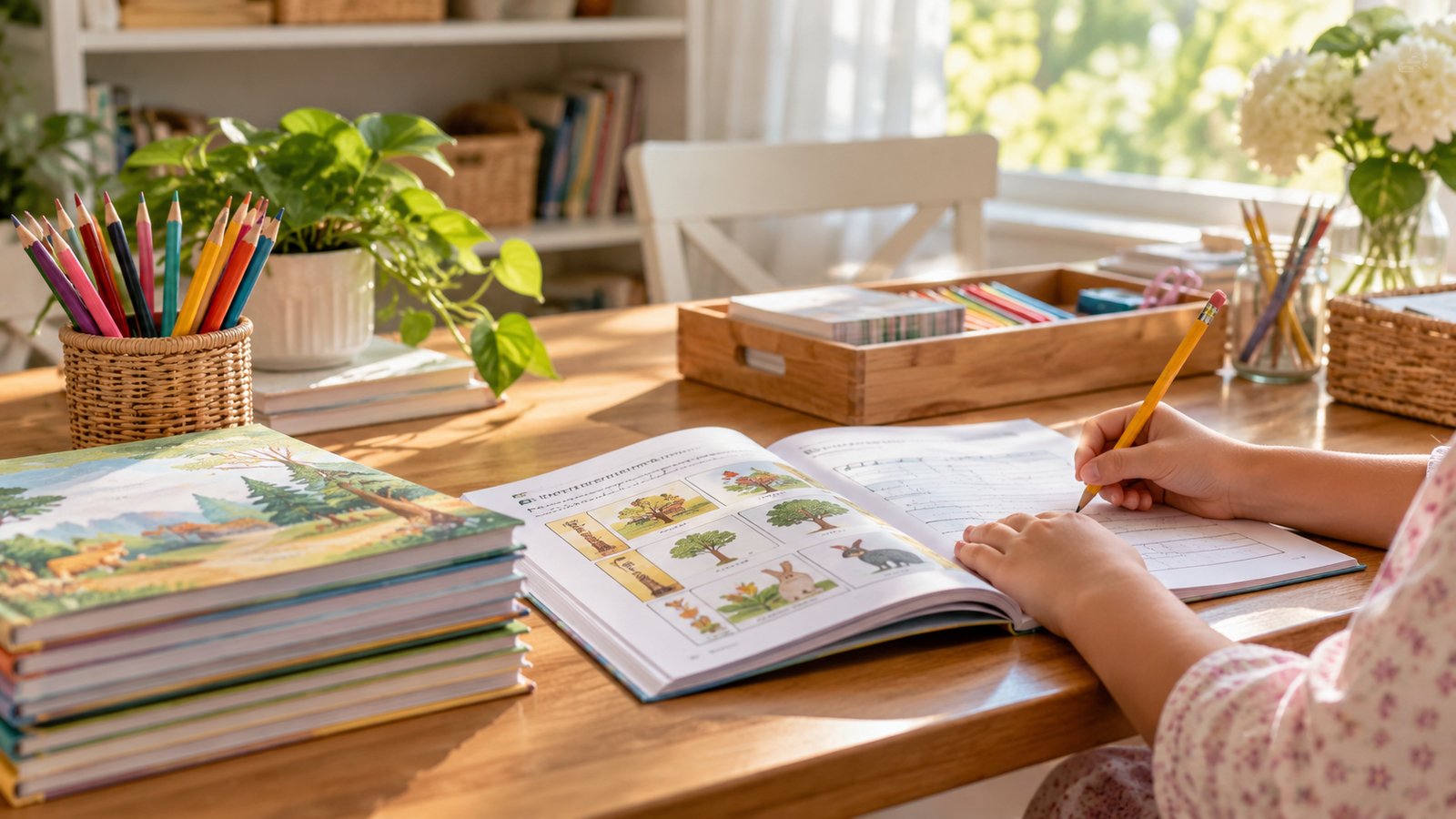
Open-and-go curriculum is designed so a parent can open the book and begin teaching. Lessons are laid out day by day, often with a script or clear instructions, a list of materials that is short or already included, and built-in practice and review. The parent follows the plan, and the plan tells them what to say, what to assign and when to move on.
Typical features include:
Open-and-go programs often come in boxed sets, workbook series or online platforms. Some are written for parents with no teaching experience. Others are designed for children who work independently, with the parent checking results.
The main strength is reliability. On a hectic day, you can start a lesson in minutes. The plan removes decisions, which many parents find freeing, especially in the first year. The structure can also reduce the fear of leaving gaps, since the sequence has been built for you.

Teacher-prep curriculum gives a framework or set of resources and expects the parent to do more of the planning. A literature-based program might provide a book list and discussion questions but leave scheduling to you. A science program might describe experiments but require you to gather supplies and decide how to spread them over weeks. A guide for a classical approach might offer a plan but need you to read ahead.
Typical features include:
The main strength is flexibility. A parent can slow down for a hard topic, speed through a familiar one, and fit lessons to a child’s curiosity. Teacher-prep programs often feel richer, with more discussion and hands-on work. They also allow families to mix resources and use the library heavily.
The cost is time. Without preparation, lessons can drift, and busy weeks can leave gaps. Parents who dislike planning may feel stressed.
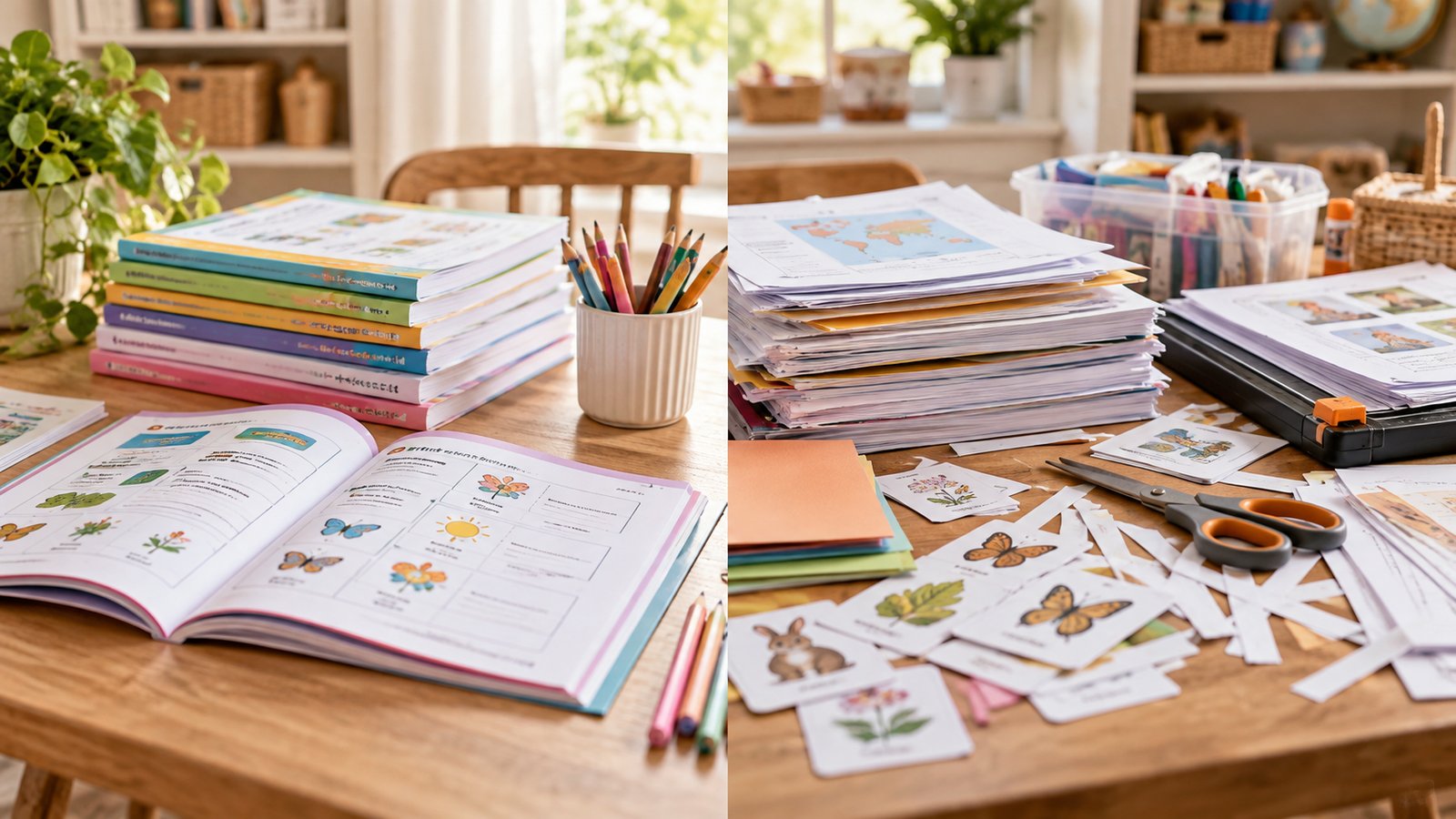
Here is how the styles typically compare:
These are tendencies, not rules. Some open-and-go programs are flexible, and some teacher-prep programs come with detailed schedules. Always look at sample lessons before buying.

Open-and-go often suits:
Teacher-prep often suits:
Many homeschoolers do not choose one side. A parent might use an open-and-go math program, because math is cumulative and benefits from structure, and use a teacher-prep approach for history, reading and science. This blend gives structure where it matters and freedom elsewhere.

Subjects differ. Math and phonics tend to build step by step, so a clear sequence helps. Science and history are more flexible, and there are many routes to the same understanding. Writing sits in between, since students need instruction and practice, plus feedback from a patient adult.
Age matters too. Younger children learn through play, stories and hands-on exploration, so lessons are short and the teacher’s attention matters more than a perfect plan. Our guide to hands-on learning materials for early elementary explains what is worth buying for young learners. Older students can handle more independent work, which makes self-paced open-and-go options appealing, though parents still need to review and discuss.
Your season of life changes the answer. A new baby, a move, a job change, illness or a busy extracurricular schedule may call for a simpler plan for a while. Switching to open-and-go for a semester is not a failure. Doing so is a reasonable response to a heavy season. The opposite is also true. When life calms down, you may want to add more projects and discussion.
Be honest about your own habits. Parents often buy the plan they wish they would follow, instead of the one they will. A parent who has never completed a weekly plan will probably find that a program that depends on weekly planning collects dust.
Do not rely on the catalog description. Use these steps:
If you are still deciding, our broader article on how to choose a homeschool curriculum covers learning styles, budget and decision fatigue. Whatever you choose, plan your week around it. Our guide on planning a homeschool schedule that works shows how to fit lessons into a real family routine.
Picture a typical week with a first-grader and a fourth-grader. With an open-and-go plan, the parent sits down on Monday morning, opens each teacher manual to the day’s page and reads the short script aloud. The younger child completes a workbook page and a short reading lesson, while the older child works through a lesson, checks answers against the key and flags problems. Preparation takes ten minutes of gathering pencils and books, and nothing is needed the night before.
With a teacher-prep plan, the same parent spends a planning session on the weekend, perhaps an hour, reading the next unit, pulling library books, and setting out supplies for a science activity. On Monday the lessons feel warmer and more conversational, with room to stop and explore a question. By Thursday, a missed day may mean rescheduling a project, which the parent handles. The week costs more planning time and gives more flexibility.
Neither version is wrong. The question is which one your household can sustain through a long winter, a sick week or a new baby.
Local groups and online communities are a rich source of practical detail, if you ask specific questions. Ask how long a typical lesson takes, how much prep the parent really does, what happens when a day is missed, and whether the program worked for a child with a similar learning style. Ask what they disliked, since complaints often reveal more than praise. Treat answers as data points, because each family’s situation differs.
Also ask about support. Some publishers offer placement tests, live help, answer keys and active user communities, and those can matter more than the lesson design when you are stuck on a concept at nine at night.
Parents often choose a program because it worked for a friend, without checking whether it fits their own child. Others buy a full year in one go and find by October that the pace is wrong. A third mistake is treating the curriculum as the boss. A plan exists to serve the child, so skipping repetitive pages, adding a read-aloud or slowing down for a hard concept is normal and healthy.
Another trap is ignoring your own learning style. A parent who dislikes scripts will resent an open-and-go manual, and one who dislikes open-ended planning will struggle with a loose framework. Pay attention to how you feel on day three, not only how the sample looked on day zero.
Compare prices carefully. An inexpensive teacher guide can require many extra books and supplies, while a more expensive boxed set may include everything. Add up the total, including printing, ink, binders, craft supplies and any online subscription fees. Our checklist of homeschool supplies by grade band helps you plan purchases without overbuying.
Consider reuse. Teacher guides and textbooks can serve several children, while consumable workbooks must be repurchased. Resale value matters too, since many families sell used curriculum online or at book sales.
Think about storage and setup. Boxed sets take shelf space, and online programs need a reliable device and internet. A small, organized area makes any program easier, and our article on setting up a homeschool space on a budget offers ideas.
Finally, check the track record of any program in a way that suits you: read independent reviews from several families, ask in local groups, and watch the publisher’s own samples.
Answer these questions:
Honest answers that point to low prep time and low confidence suggest starting with open-and-go. Time and enthusiasm suggest teacher-prep. Answers that differ by subject suggest a mix.
Sources worth checking include your state department of education for legal requirements, the publishers’ own sample lessons and placement tests, and independent reviews from several homeschool families.

It describes curriculum with ready-made, day-by-day lessons that need little or no preparation from the parent. Teacher notes and materials are laid out so you can begin teaching right away.
Neither is better in general. Teacher-prep gives more flexibility and depth but takes more planning time, while open-and-go saves time and gives structure. The right choice depends on your family.
Yes. Many families use open-and-go for cumulative subjects such as math and phonics and teacher-prep for science, history and projects.
Price varies widely in both groups. Compare the total cost per child, including consumables and supplies, instead of the sticker price alone.
